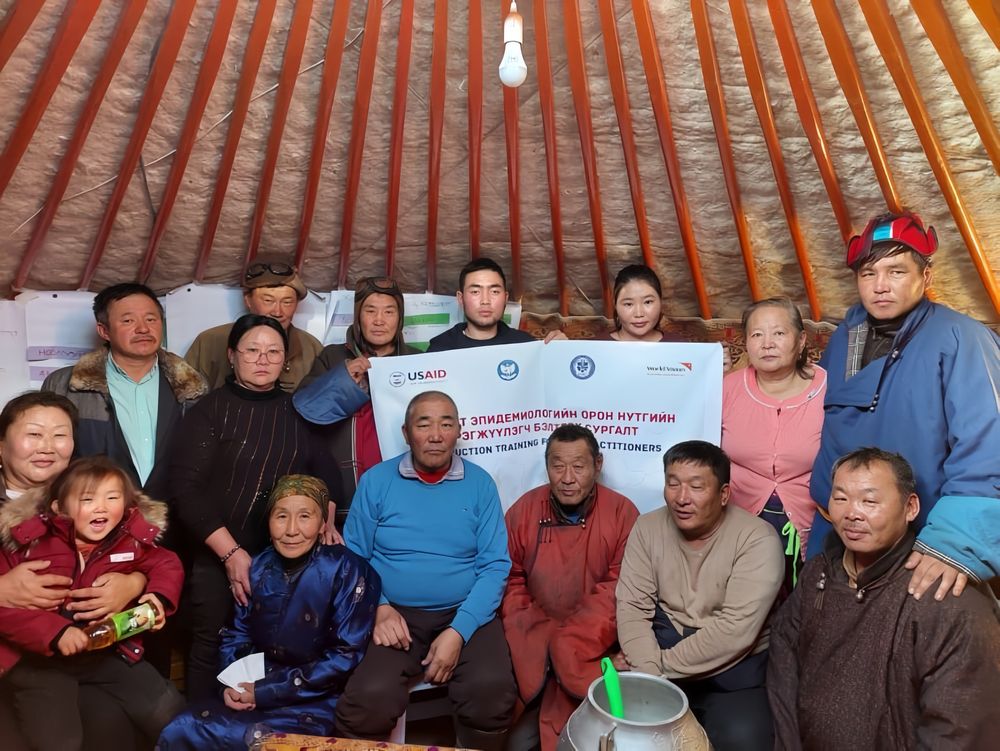
The Climate Resilient Communities (CRC) project, funded by the USAID’s Bureau of Humanitarian Assistance (BHA) concluded implementation on March 12, 2025, as a result of the Stop Work Order from the U.S. government issued on January 24, 2025. Over the course of its implementation, the project targeted Ulaanbaatar city, Dornod, Dundgobi, Dornogobi, Gobi-Altai and Uvs provinces, and supported communities in becoming resilient to climate-related disasters through strengthened disaster risk management, improved livelihoods, and sustainable agriculture.
The project reached a total of 65,666 out of the target of 79,255 individuals and community members in coordination with the General Authority for Veterinary Service (GAVS), National Emergency Management Agency (NEMA), Ministry of Food, Agriculture and Light Industry and their local branches at the local level.
Through its Community Participatory Disaster Risk Assessment (CPDRA) tool, WV Mongolia helped communities build their capacity in identifying hazards and risks which led to the development of disaster mitigation action plans, as well as advocacy to local governments to allocate budget to prevent disasters. As a result, local communities initiated and implemented 29 micro-projects with the support of their local authorities. A total of 4,217 (female 2,448 / male 1,769) individuals participated throughout the whole process, highlighting the reach and impact it had in target communities. Additionally, the “Safe Neighbors” public campaign was organized jointly with the Emergency Management Agencies across communities, facilitated with the Be Ready training and information dissemination activities to reach 41,441 (female 21,007 / male 20,544) people in all project sites.
Within the agricultural and livestock sector, 4 herders’ groups were established in Dundgobi, Dornogobi, Gobi-Altai, and Uvs provinces. The herders took part in a series of training courses on fodder planting, as well as alternative planting methods such as soilless and hydroponic planting. They were supported with all the necessary equipment worth USD 201,576. With the knowledge and tools combined, they harvested over 40 tons of nutritious animal feed from a total of 20 hectares of land. The quality of animal feed improved drastically which allowed for livestock offspring to survive the harshest 2 months of winter.