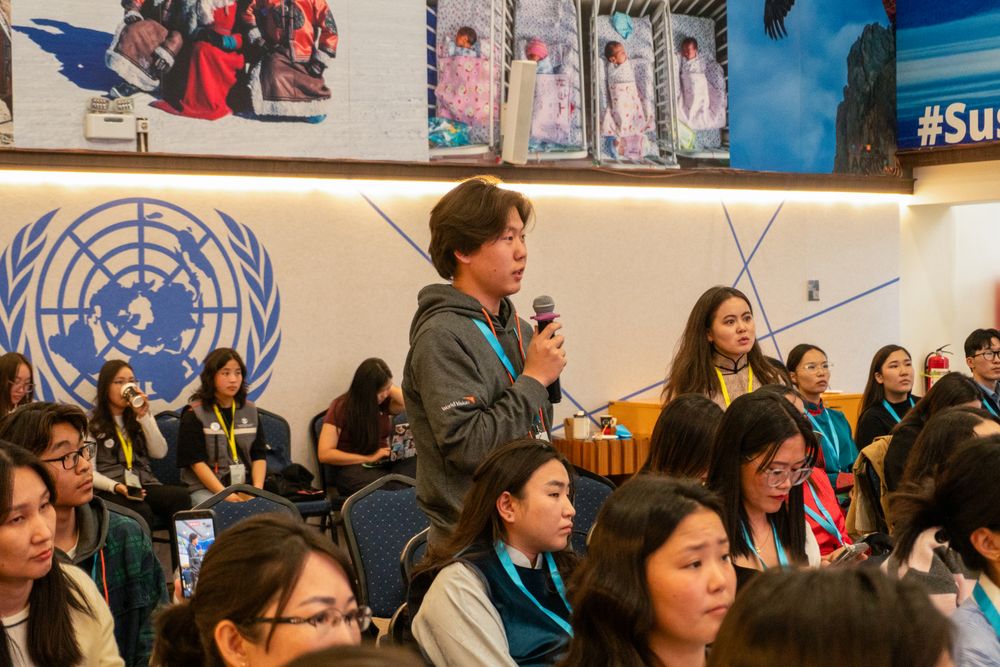
As Mongolia prepares to host the Seventeenth Session of the Conference of the Parties to the United Nations Convention to Combat Desertification (COP17), World Vision Mongolia has been leading the Young Voices for COP17 advocacy campaign to ensure that children and young people are meaningfully represented in environmental decision-making processes.
World Vision Mongolia has extensive experience in amplifying children’s voices and creating opportunities for meaningful participation in public policy discussions. Through this campaign, children were not only consulted but empowered to become active contributors to solutions for environmental challenges affecting their lives and futures.
As a cornerstone of the campaign, a nationwide child-led research initiative engaged children aged 12 to 18 from both urban and rural communities across Mongolia. A total of 2,000 children participated in the survey, while 40 children contributed through focus group discussions. Together, they explored key issues related to desertification, land degradation, climate change, nutrition, and food security.
The research revealed that environmental degradation is not an abstract issue for children. They experience its impacts directly through water scarcity, degraded pastures, droughts, dust storms, pollution, and increasing climate-related risks. Children also highlighted the growing challenges of accessing affordable and nutritious food as environmental pressures continue to affect livelihoods and food systems.
Importantly, children demonstrated a clear understanding of the connection between environmental health and human wellbeing. They emphasized that land degradation and desertification affect not only ecosystems but also nutrition, health, education, and future opportunities for children and their communities.
Children also made it clear that they want to be part of the solution. Their recommendations included tree planting, ecosystem restoration, water conservation, waste reduction and recycling, stronger environmental education, improved school food environments, and greater participation of children in local decision-making processes.